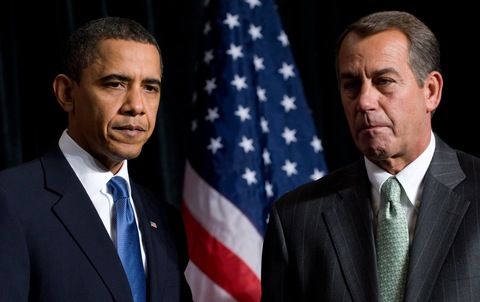
 If one thing is for sure this November, the loser or winner of the 2010 midterm Elections will not be the politicians on the ballots; rather, the American citizenry casting these ballots.
In an election year that has produced the highest campaign spending in the history of the republic (almost $2 billion), the battle has continued to rage on who best speaks on behalf of the American people.
In late September, at a news conference in a small hardware store in Virginia, about 20 miles from the U.S. Capitol, a group of 12 incumbent House Republicans presented a document titled “A Pledge to America.” In announcing the agenda, the Republican House Minority Leader John Boehner said after listening to the American people for the past 20 months, “we get it, we get it.”
Meanwhile, with polls showing Democrats are about to be beset by Armageddon, President Obama and the rest of his party are claiming they best empathize with the groaning of an electorate in pain.
Unemployment is at 9.5%. With the exception of the super-rich, who barely felt the Great Recession, the proletariat is sitting, standing, and walking around all-day on economic pins and needles. We have the greatest income disparity since the creation of the union, with the top 20% accounting for 85% of the national wealth. The bottom 40% of Americans has zilch (no wealth that is)!
Now, with Democrats controlling the executive and legislative branches of government for the past 20 months, it’s hard to convince an electorate feeling such great pains that the pains they feel could have been worse. How do one convince a man who stared down the barrel of a loaded gun things could have been worse had he been actually shot, when he’s so visibly shaken and traumatized—so much, that understandably, his reasoning is still being processed through the uneasiness he feels.
This is the quandary in which Democrats find themselves: A quandary compounded by their lousiness in communication.
Economists did not call the recession of 2008 the Great Recession for nothing; global financial markets teetered at a precipice for months. And nowhere else were conditions direr than the United States, which accounted for the greatest share of market volatility.
As we all know, Obama inherited a mess, putting it mildly. The previous Republican administration inherited a budget surplus and left with a record deficit.
It is no secret that the failed economic policies of the Bush administration almost sent us into a “second” Great Depression. Be it the irresponsible and reckless deregulation of the financial markets; the massive tax cuts for the rich and powerful; the two unpaid and mismanaged wars; and a host of other ill-fated decisions—the nation was on its knees.
By admission of most objective historians, President Obama has been more substantive than any of the past administrations of the last 20 years. There were the stimulus and recovery bills, credit card reform, student loan reform, Wall Street reform, and even the biggest of the past 60 years—healthcare reform. All these less than two years into a four-year job.
But for reasons best known to Democrats, they’ve not only been numb in enunciating their accomplishments, some have even tried to distance themselves from them. For instance, the passage of healthcare reform, which, by 2014 would insure 32 million more Americans and drastically cut into the federal deficit.
So in place of general awareness of facts on the ground, we have an electorate that is confused and angry because the party in power will not state in intelligible terms what it has done to better livelihoods, and the party before, is the devil they already know.
Yet, both clamor they speak for the people.
One thing is for sure, the failed Republican policies of yesteryear will not get us out of this ditch—we are here because of them. Republicans aggressively still tout more of the same by promising to permanently engrain the Bush tax cuts for the wealthy; further deregulate financial markets; cut into social assistance when millions of unemployed Americans need it most, etc.
Whatever happens at the ballot this November, Americans are poised to either improve their lot or dampen it by reversing to the failed and selfish policies of the past.
At times, when I’m sitting in a very uncomfortable chair and my behind hurts, I shift from cheek to cheek; not because the other cheek is less painful, but just because I’ll rather try the other cheek already.
If Republicans take control of either or both Houses this fall, it will not be because they are the butt cheek that hurt less or not at all, it would be because they are just the other cheek on an equally painful butt—beneficiaries of the increased restlessness of a groaning population.

 The Restless ChronicleS
Leave a comment