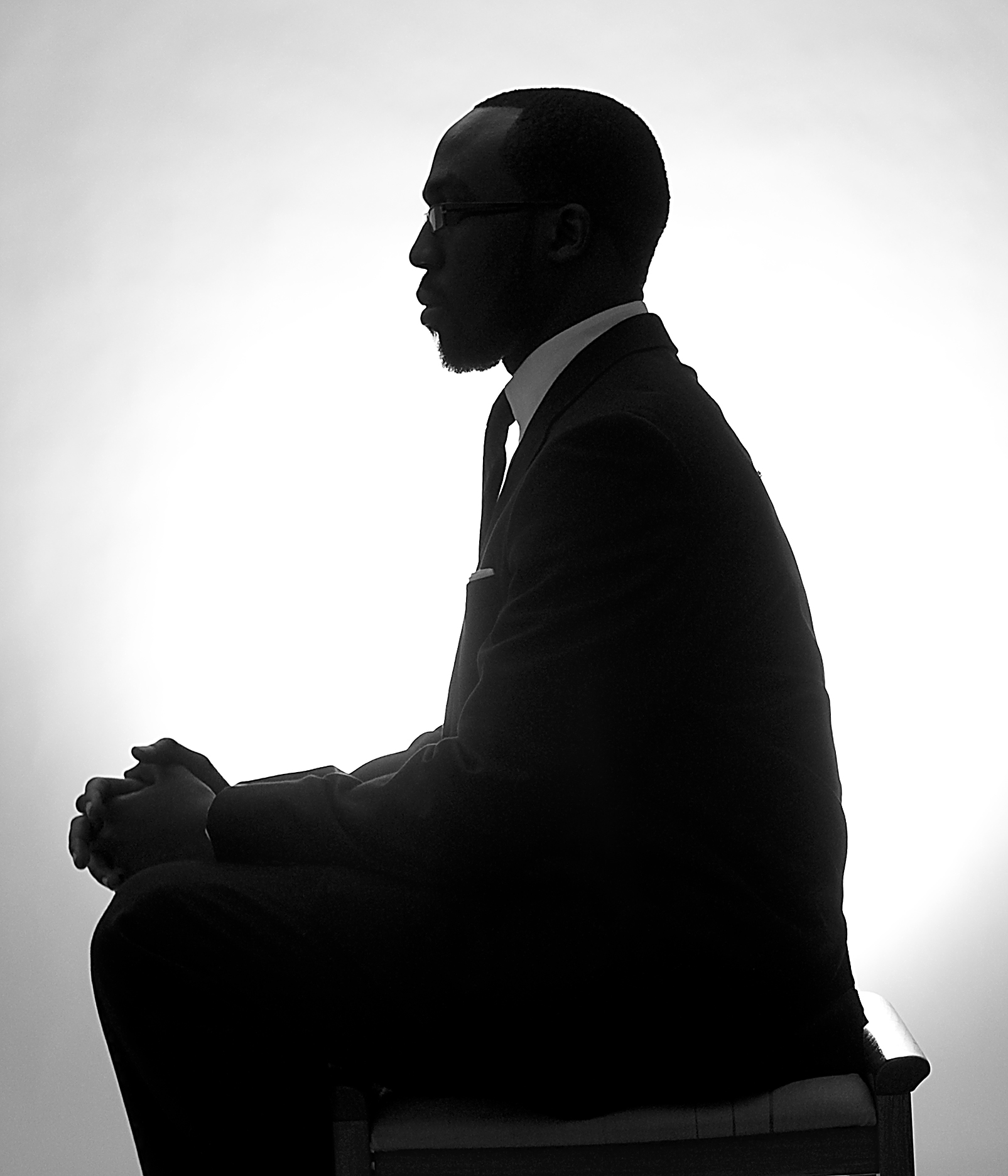
About this time last year, I wrote a lengthy and searing piece: Searching for Black Jesus. The air, like now, was choked with holiday festivities and tidings; but it also had all the emotions that came with a black man being elected the leader of the heftiest empire on earth.
I have always loved the Christmas season. Between my birthday and the weeks leading up to Christmas Day, I have often wondered if I wasn’t a hopeless sucker for the latter. Something about the overwhelming theme of love the season brings; be it the rhapsodic carols or the smothering of everything that hangs with the color red.
So upon reading an op-ed some weeks ago by New York Times columnist, Charles M. Blow, titled “Black in the Age of Obama,” I felt a revisit of black nation since I wrote my aforementioned piece was timely.
Having spent a lifetime on three continents – fifteen years in Africa, one year in Europe, and ten years in North America – I sit at a junction in the road with a deep sense of my black nation.
Christmas is a religious holiday: A Christian holiday that celebrates the birth of Jesus, regardless of its over-the-top commercialization through the years with Santa and Rudolf and Mistletoe and everything else in between.
Upon birth, the Bible says young Jesus was taken into Egypt by His father Joseph to prevent Herod the Great from killing the young messiah. He stayed there for some years before returning to Israel, according to the book of Matthew.
But oh, don’t worry! I do not intend to take you to church. Not today. What makes such passing detail of any significance? It is because now, more than ever, it appears once baby Jesus stepped off the African continent, anything and everything of eternal good left with Him.
The Africa on which Jesus once lived is today a stigma, one that even blacks taken from the continent cringe at the thought of being associated. Today, black nation is as divided as it’s ever been. In the Oscar-winning documentary about the Ali-Foreman fight in the Congo, award-winning director Spike Lee echoed this point in affirmation: “There was a time, if you called a black person African, you know – they’d be ready to fight.”
Although he made this comment only a few years back, the prevalence of the sentiment is still real. I recently got into an un-winnable argument with a black sister whose black family came to the United States by way of France. She swore vehemently that although at some point someone in her family “might” have emigrated from Africa (really?), she doesn’t know any African in her family; and per her reasoning, she’s not in the least bit African. To paraphrase her sentiment, she’s American and for some odd reason just happens to have a dark hue.
As a native African, the same can be said for some of my African brothers and sisters here in the United States. I know Africans who emigrate here tend to look at African-Americans as lazy amongst other things, with a “us-against-them” mentality. What is lost in their reasoning is that generations of these “lazy” African-Americans fought hard and on so many occasions paid the ultimate price in making it okay for an indigenous African to emigrate here and not be called boy or have his family sit in “black-only” sections of local restaurants. So what if you see the destruction that’s ravaging the community? That, I believe, should warrant empathy and activism – surely not apathy.
All around, there’s just war in black nation.
“Symbols matter,” writes Melissa Harris-Lacewell in the article “I’m Dreaming of a Black Christmas” – written for The Nation Magazine and featured on Npr.org. “They help shape our understanding of national culture and identity,” she writes.
And to this end, symbols have been crucial in defining black nation. According to TV images, Africa is this “one country” where baboons and lions dine with human beings in their thatched huts. So, to a certain degree, I can understand those who argue that this damps pride in black nation.
But I believe, now, in this age of Obama, such shame ought to be turned into confident anger that seeks to catapult black nation from the debris in which it currently lies.
Obviously, the presidency of Barack Obama has not changed the challenges that bind all black people together. Black people in the United States have a higher rate of HIV/AIDS infection than any other race. Two of the top three countries with the world’s highest HIV/AIDS infection population are in Africa. Over a third of black children in America live in poverty and according to a recent Department of Agriculture report, more likely as a group to suffer “food insecurity.” Africa is the world’s poorest and most underdeveloped continent; and according to a 2008 World Bank estimate, the average poor person in Sub-Saharan Africa lives on 70 cents a day while 80.5 percent of the population lives under $2.50 a day. Is there a parallel here?
No part is greater than the sum of the whole. I find it a form of treatable malady the belief that what affects one black over here does not affect another over there. Charity begins at home and Dr. King’s words begin to take on a special meaning when brought closer to home. “We are caught in an inescapable network of mutuality,” he wrote, “tied in a single garment of destiny.”
To be black right now ain’t cool. And that’s because to be from Africa ain’t cool. Africa can only do as good as her children do. It is high time blacks outside the continent pressured their home governments for aid, resources, and anti-imperialistic policies toward Africa. It is high time blacks on the continent insisted and settled for nothing less than accountability and responsibility from their governments. It is high time blacks outside the continents held blacks on the continent to task and vice versa.
It is high time we stopped living in this hood, and no I do not mean brotherhood. As we celebrate this Christmas and enter this coming decade, black nation can do better and must do better. America gave us Obama and Disney finally gave us Tatiana – a black princess. But these are not privileges. For when we forget where we’re coming from, we lose respect for where we are, and sight of where we’re going and ought to be.
Merry Christmas and a Happy New Year to my black nation!


 The Restless ChronicleS
Leave a comment